
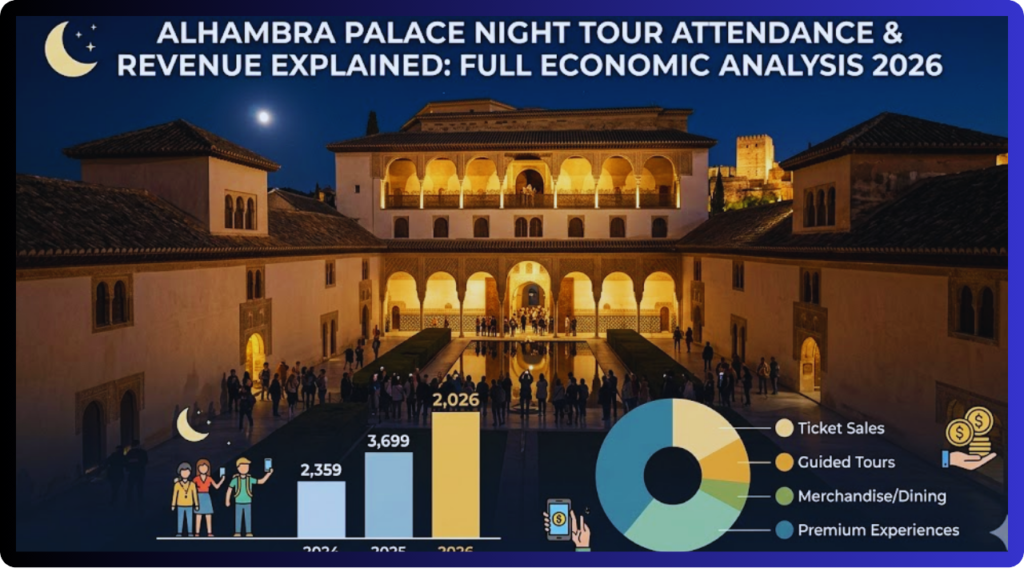

The topic of alhambra palace night tour attendance revenue has become increasingly important in modern cultural tourism analysis because it reflects how heritage sites can balance preservation with profitability. Unlike daytime visits that focus on high-volume entry, night tours are designed as premium experiences with controlled access and enhanced storytelling. This creates a unique economic structure where fewer visitors generate higher value per ticket. The Alhambra Palace in Granada uses this model to protect its fragile architecture while still supporting strong financial returns. As global tourism shifts toward experience-based travel, night tours are gaining even more significance. This article explores how attendance, pricing, and visitor behavior shape the overall revenue system. Digital tourism trends are also influencing how visitors plan their trips in advance. Cultural preservation strategies are closely linked with revenue planning. International demand continues to increase year after year. The night tour model is now seen as a global example of sustainable tourism. This balance between culture and economy defines its long-term success.
Who Is Managing Alhambra Night Tours?
The management of alhambra palace night tour attendance revenue is handled by official cultural heritage authorities responsible for preserving the monument. These institutions ensure that tourism activities remain balanced with conservation needs. Their primary role is to control visitor flow, manage ticket distribution, and protect the architectural integrity of the site. Every operational decision is guided by strict preservation policies. Revenue generated from night tours is reinvested into restoration, maintenance, and heritage protection programs. This ensures that tourism directly contributes to safeguarding the Alhambra for future generations. The management system is designed to maintain both cultural value and financial sustainability. They also collaborate with international tourism bodies for better visitor regulation. Smart monitoring systems track real-time visitor movement. Seasonal planning helps avoid overcrowding issues. Staff training ensures high-quality visitor service. Technology is increasingly used to improve operational efficiency. Digital booking platforms reduce manual errors and improve accessibility. Conservation experts regularly assess structural safety. Financial audits ensure transparency in revenue usage. Policy updates are frequently implemented for sustainability.
Night Tour Attendance Trends at Alhambra Palace
Visitor Volume and Seasonal Variation
The alhambra palace night tour attendance revenue system is based on limited visitor capacity, typically ranging between 120,000 and 150,000 annual night visitors. This represents a small portion of total tourism flow but is carefully controlled to prevent damage to the monument. During peak seasons, nightly attendance reaches 400 to 500 visitors, while off-season numbers drop to 200–300. These fluctuations reflect seasonal travel demand and booking trends. Despite lower volume, night tours remain highly popular due to exclusivity. Controlled attendance ensures both preservation and premium experience delivery. Online booking demand is consistently increasing every year. International tourists form a major share of visitors. Weekend tours often sell out faster than weekdays. Special cultural events increase demand significantly. Weather conditions also influence attendance patterns. Social media exposure has increased global interest. Tourism agencies actively promote night experiences. Visitor demographics are becoming more diverse. Advanced reservation systems help manage demand efficiently.
Capacity Restrictions and Strategic Limitation
Strict capacity limits are a defining feature of alhambra palace night tour attendance revenue planning. Authorities intentionally restrict visitor numbers to avoid overcrowding and structural stress on historic areas. This controlled access enhances visitor experience by creating a peaceful and immersive environment. It also increases perceived value, allowing higher ticket pricing. Instead of maximizing quantity, the focus is on maximizing quality. This strategy ensures long-term sustainability of both tourism and heritage preservation. Limited group sizes improve guide interaction quality. Visitor safety is significantly enhanced. Environmental impact is reduced through controlled entry. Cultural authenticity is preserved more effectively. Operational efficiency is improved through structured scheduling. Visitor movement is carefully monitored. Maintenance teams can work without disruption. Noise levels remain minimal during tours. This ensures a more authentic cultural experience.
Revenue Generation from Night Tours
Premium Ticket Pricing Model
A major component of alhambra palace night tour attendance revenue comes from premium ticket pricing. Night tour tickets are priced higher than daytime entries due to exclusivity and limited access. Annual direct revenue from ticket sales is estimated between €1 million and €2.5 million. Although smaller than daytime income, it represents a high-value tourism segment. Visitors are willing to pay more for quiet surroundings and enhanced visual experiences. This pricing strategy ensures strong financial efficiency despite limited capacity. Seasonal pricing adjustments are applied based on demand. Early booking incentives help manage visitor flow. Premium packages increase overall revenue per visitor. High-demand dates generate maximum income. Pricing reflects cultural and historical value. Luxury tourism trends support higher pricing acceptance. Special night events generate additional revenue. Dynamic pricing improves financial performance. Market segmentation increases profitability.
Additional Income Sources
Beyond ticket sales, alhambra palace night tour attendance revenue is supported by guided tours, audio guides, and curated cultural experiences. These additional services significantly increase per-visitor spending. Many tourists choose upgraded experiences to gain deeper historical understanding. Nearby transport and hospitality services also benefit indirectly from night tour traffic. This creates a wider economic ecosystem around the monument. Combined income streams strengthen overall revenue stability. Local businesses benefit from increased tourism flow. Souvenir sales contribute additional income. Private tour services attract premium customers. Hospitality sector growth is directly linked. Travel agencies also increase booking volume. Cultural workshops generate extra revenue. Photography services are often purchased by visitors. Transportation services experience higher demand. Regional economy benefits significantly.
Visitor Spending Behavior and Value Impact
High Per-Capita Spending Patterns
One of the strongest aspects of alhambra palace night tour attendance revenue is high spending per visitor. Night tourists typically spend between €26 and €32 per person including additional services. This is significantly higher than many standard tourist attractions. The premium environment encourages visitors to invest in guided experiences. Lower crowd density increases engagement time inside the site. This leads to stronger economic returns per visitor. Visitors often upgrade to private tours. Cultural merchandise purchases are common. Extended stay increases spending potential. Photography services add extra revenue. Local transport usage increases overall spending. Dining expenses contribute to local economy. VIP packages increase revenue per guest. Exclusive experiences boost spending behavior. Emotional engagement enhances value perception.
Experience-Driven Financial Growth
Visitor behavior strongly influences alhambra palace night tour attendance revenue. Most night visitors are motivated by unique cultural and visual experiences rather than simple sightseeing. This increases willingness to pay for enhanced access and storytelling. Atmospheric lighting and quiet surroundings create emotional engagement. As a result, visitors are more likely to purchase additional services. This experience-driven model supports consistent revenue growth. Social media sharing increases global awareness. Emotional satisfaction encourages repeat visits. Cultural storytelling enhances engagement. Word-of-mouth promotion boosts demand. Tourism branding becomes stronger over time. Digital reviews influence future bookings. Travel influencers expand visibility. Visitor loyalty increases steadily. Cultural immersion drives satisfaction.
Comparison with Daytime Tourism Revenue
Volume vs Value Strategy
Daytime tourism at the Alhambra attracts millions of visitors annually, generating significantly higher total revenue. However, the alhambra palace night tour attendance revenue model focuses on value rather than volume. While day visits contribute the majority of income, night tours offer better margins per visitor. This creates two complementary strategies within the same site. Day tours maximize reach, while night tours maximize profitability. Together, they form a balanced tourism system. Night tours reduce congestion pressure. Value-based tourism increases profitability. Controlled access improves experience quality. Revenue balance ensures sustainability. Both systems support long-term growth. Operational efficiency is improved. Visitor experience is enhanced. Financial diversification reduces risk. Strategic balance strengthens tourism model.
Contribution to Overall Financial Structure
Although night tours account for fewer visitors, their contribution to alhambra palace night tour attendance revenue remains significant. Estimates suggest they contribute around 15–20% of total tourism income when all factors are considered. This includes ticket sales and related services. Such contribution highlights the importance of diversified tourism models. It also strengthens financial stability. The combination of day and night operations ensures long-term sustainability. Night tours stabilize seasonal income. They reduce dependency on daytime tourism. Financial diversification improves resilience. Operational balance supports efficiency. Conservation funding becomes more stable. Revenue distribution is more sustainable. Risk management is improved. Long-term financial planning becomes easier. Economic stability is strengthened.
Pricing Strategy Behind Alhambra Night Tours
Premium Positioning and Market Value
The pricing strategy is central to alhambra palace night tour attendance revenue success. Night tours are positioned as premium cultural experiences rather than standard entry tickets. This allows higher revenue despite limited capacity. Prices are adjusted based on seasonal demand and availability. This ensures a balance between accessibility and profitability. Premium positioning reinforces exclusivity. Luxury tourism demand supports pricing power. Limited availability increases value perception. Cultural importance justifies premium pricing. High-end travelers form core audience. Market segmentation improves revenue strategy. Brand reputation increases perceived value. Exclusive access enhances demand. Premium branding strengthens positioning. Market demand remains stable.
Demand-Based Pricing Adjustment
Dynamic pricing supports alhambra palace night tour attendance revenue stability. Prices remain relatively consistent during peak demand due to limited availability. During off-peak periods, stable pricing helps maintain visitor interest. This approach ensures consistent bookings throughout the year. It also prevents overcrowding while maximizing revenue efficiency. Demand-based pricing supports long-term financial balance. AI-based forecasting improves pricing accuracy. Booking platforms optimize revenue flow. Seasonal demand analysis guides decisions. Smart pricing reduces revenue loss. Tourism analytics enhance planning. Predictive systems improve efficiency. Market trends influence pricing strategy. Real-time adjustments optimize income. Revenue management becomes more effective.
Economic Sustainability of Night Tours
Preservation-Funded Financial Model
A significant portion of alhambra palace night tour attendance revenue is reinvested into conservation efforts. Funds are used for restoration, maintenance, and structural protection. This creates a self-sustaining system where tourism supports heritage preservation. Revenue becomes a tool for protecting cultural identity. This model ensures long-term survival of the monument. It is widely considered a successful global example. Maintenance funding ensures stability. Restoration projects are continuously supported. Environmental protection is included. Cultural heritage is preserved. Long-term funding ensures sustainability. Structural safety is continuously monitored. Conservation technology is implemented. Heritage value is protected. Financial reinvestment ensures continuity.
Balanced Tourism Distribution
Balanced visitor flow is essential for alhambra palace night tour attendance revenue sustainability. Night tours reduce pressure on daytime tourism. This prevents overcrowding and reduces structural wear. It also improves visitor experience across all time slots. Balanced distribution ensures long-term site durability. This strategy supports both economic and cultural goals. Visitor flow is evenly distributed. Infrastructure stress is reduced. Experience quality is improved. Operational efficiency increases. Tourism pressure is effectively managed. Resource usage is optimized. Environmental impact is minimized. Visitor satisfaction remains high. System balance is maintained.
Visitor Experience and Revenue Relationship
Quality Experience as Revenue Driver
The success of alhambra palace night tour attendance revenue depends heavily on visitor experience quality. Night tours offer a calm and visually rich environment. This increases visitor satisfaction and perceived value. Higher satisfaction leads to increased willingness to pay. Experience quality directly influences revenue growth. This makes visitor satisfaction a key financial driver. Immersive storytelling enhances engagement. Lighting design improves experience. Cultural depth increases value perception. Guided tours improve learning. Experience quality drives demand. Atmosphere enhances emotional response. Interpretation adds value. Engagement increases satisfaction. Quality experience ensures repeat visits.
Emotional Engagement and Spending
Emotional engagement plays a strong role in alhambra palace night tour attendance revenue. Visitors feel more connected due to lighting, storytelling, and atmosphere. This encourages additional spending on guided services. Emotional satisfaction also increases positive reviews. This leads to higher demand over time. Emotional connection is a major revenue factor. Memorable experiences increase loyalty. Cultural connection strengthens interest. Social sharing boosts visibility. Emotional value drives spending. Tourism engagement improves significantly. Personal connection enhances satisfaction. Storytelling builds memory retention. Experience depth increases impact. Emotional tourism drives revenue.
Global Tourism Influence on Night Tours
International Demand Growth
Global tourism trends strongly support alhambra palace night tour attendance revenue. International travelers seek unique and exclusive cultural experiences. Night tours fulfill this demand effectively. Visitors from across the world contribute to steady attendance. This global appeal ensures consistent revenue. International interest continues to grow year after year. European tourists dominate visitor flow. Asian markets are expanding rapidly. American tourists show strong interest. Global promotion increases demand. International tourism supports growth. Travel agencies promote packages. Digital marketing expands reach. Cultural appeal attracts diverse audiences. Global recognition strengthens demand.
Competitive Position in Heritage Tourism
The Alhambra holds a strong position in global heritage tourism, boosting alhambra palace night tour attendance revenue potential. Few sites offer similar nighttime access experiences. This exclusivity sets it apart from competitors. It maintains strong global demand and visibility. Competitive advantage ensures long-term financial growth. This strengthens tourism performance worldwide. Unique architecture enhances attraction. Cultural heritage status increases value. Limited access improves exclusivity. Global branding strengthens identity. Tourism competitiveness remains strong. Market positioning is highly favorable. Historical importance attracts attention. International reputation supports growth. Cultural uniqueness ensures demand.
Challenges Affecting Night Tour Revenue
Despite success, alhambra palace night tour attendance revenue faces challenges such as strict visitor limits, seasonal changes, and maintenance costs. Capacity restrictions limit revenue expansion. Weather conditions also affect attendance levels. Maintaining high-quality experiences requires ongoing investment. Balancing preservation and tourism growth remains complex. These challenges must be carefully managed. Operational costs remain high. Seasonal fluctuations impact demand. Regulatory limits restrict expansion. Maintenance requires constant funding. Strategic planning is essential. Technological upgrades are costly. Visitor demand fluctuates unpredictably. External economic factors affect tourism. Sustainability requires continuous adjustment.
Future Outlook for Alhambra Night Tourism
The future of alhambra palace night tour attendance revenue remains stable due to increasing demand for immersive cultural experiences. Authorities are expected to maintain strict visitor control while improving lighting and digital systems. These improvements enhance visitor experience without increasing physical impact. Sustainable tourism practices will remain central. Night tours will continue to grow in importance. This ensures long-term cultural and financial stability. Digital transformation will enhance experience. Global demand will keep rising. Smart systems will improve efficiency. Sustainability will remain priority. Tourism growth is expected. AI systems will improve management. Virtual previews will boost interest. International collaboration will expand reach. Innovation will enhance experience.
Future Revenue Growth Potential of Alhambra Night Tours
The long-term outlook for alhambra palace night tour attendance revenue is positive as demand for premium cultural tourism increases globally. Even with visitor caps, revenue can grow through improved pricing and enhanced experiences. Authorities may introduce more premium packages and deeper storytelling options. This allows revenue growth without increasing visitor numbers. Focus remains on maximizing value per visitor. This strengthens financial sustainability. Luxury tourism expansion supports growth. Experience innovation increases revenue. Booking systems improve efficiency. Global demand supports expansion. Cultural tourism continues rising. Premium services will expand. Market diversification will increase income. Digital transformation will enhance revenue. Strategic pricing will improve profitability.
Technological Innovation and Digital Experience Expansion
Technology will play a key role in shaping alhambra palace night tour attendance revenue. Advanced lighting, augmented reality, and digital storytelling will enhance visitor engagement. These tools improve experience quality without increasing physical impact. Smart ticketing systems will streamline operations. This improves efficiency and satisfaction. Technology increases perceived value and revenue potential. AR systems enhance storytelling. Mobile apps improve navigation. Digital guides increase engagement. Smart analytics optimize flow. Technology modernizes tourism. AI translation tools support global visitors. Virtual previews increase bookings. Automation reduces operational load. Digital personalization improves experience.
Long-Term Sustainability and Cultural Preservation Balance
A key factor in the future of alhambra palace night tour attendance revenue is maintaining balance between tourism and preservation. Strict visitor limits protect the monument’s structure. Revenue supports restoration and conservation work. This ensures tourism contributes positively to heritage protection. Sustainable planning guides all decisions. This balance ensures long-term cultural and financial stability. Environmental protection remains essential. Cultural integrity is preserved. Funding supports restoration. Visitor impact is controlled. Sustainability ensures future protection. Climate strategies will be important. Heritage laws will remain strict. Community involvement will increase. Monitoring systems will protect structure.
FAQs
1. What is alhambra palace night tour attendance revenue?
It is the income generated from limited-capacity night tours at the Alhambra through ticket sales and services.
2. How many visitors attend night tours yearly?
Around 120,000 to 150,000 visitors attend annually.
3. Why are night tours important?
They fund conservation while offering a premium cultural experience.
4. Are night tours expensive?
Yes, they are priced higher due to exclusivity and limited access.
5. What drives revenue the most?
Pricing strategy, visitor limits, and experience quality.
ReadMore:Do the driving modes in Cadillac Lyriq offer different ranges or battery usages? Explained in Detail
Final Thought
The alhambra palace night tour attendance revenue model clearly shows how heritage tourism can successfully balance financial growth with cultural preservation. By limiting visitor numbers and focusing on premium experiences, the Alhambra generates strong income without damaging its historical structure. This approach proves that sustainability and profitability can work together when tourism is carefully managed. Night tours may have lower attendance compared to daytime visits, but their higher value per visitor makes them a powerful revenue stream. As global demand for unique and immersive travel continues to grow, this model is likely to become even more important in the future. It also highlights how strategic pricing can maximize revenue without increasing crowd pressure on the site. Strong management and controlled access ensure long-term preservation of cultural heritage. Additionally, visitor satisfaction remains high due to the exclusive and peaceful environment. Overall, this system sets a global benchmark for sustainable cultural tourism development.