
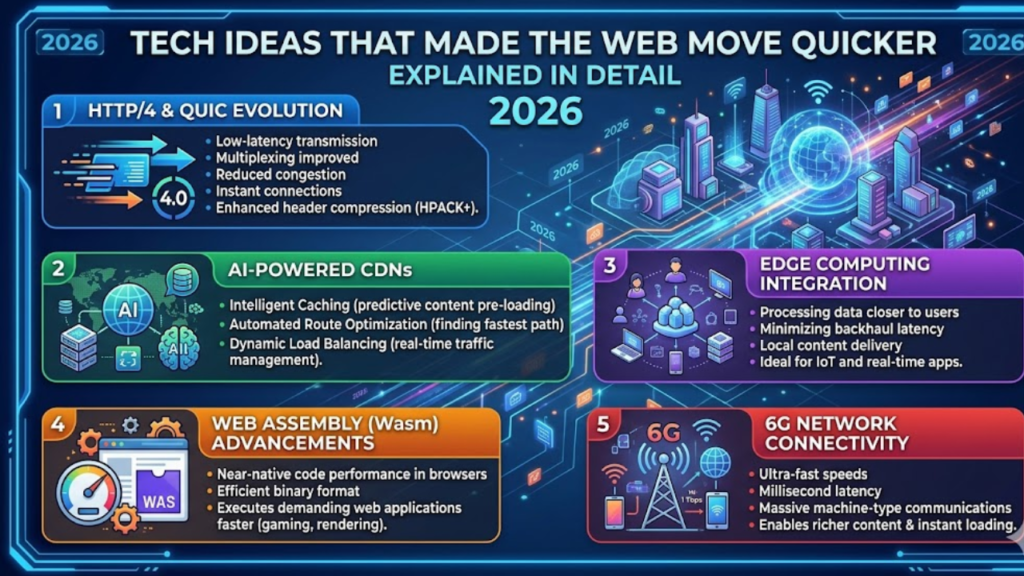

The internet has become one of the fastest communication systems in the world, but this level of speed is the result of decades of continuous innovation. In its early stages, the web was slow, unstable, and heavily limited by weak infrastructure and low bandwidth connections. Pages took time to load, images appeared slowly, and users often experienced delays while navigating websites. Over time, engineers and developers introduced advanced systems that significantly improved performance and reduced waiting times. The phrase tech ideas that made the web move quicker represents all the innovations that helped transform the internet into a fast, responsive, and globally accessible system. Today, speed is a critical factor for user experience, business success, and search engine performance across the digital world.
Who Created the Technologies Behind Faster Web Performance
The technologies that improved internet speed were not created by a single person or company but were developed through global collaboration. Engineers, researchers, networking specialists, and software developers from different organizations contributed to the evolution of modern web systems. Companies working on browsers, servers, cloud computing, and networking infrastructure all played a role in improving performance standards. These collective efforts led to the development of faster communication protocols, efficient data delivery systems, and scalable hosting technologies. These improvements represent key tech ideas that made the web move quicker by enabling faster data transfer, better stability, and improved user experiences across all devices. Continuous innovation ensures that the internet keeps improving as global demand increases.
Content Delivery Networks Revolutionized Website Speed
How CDNs Reduced Loading Times
Content Delivery Networks (CDNs) changed how websites deliver content by distributing data across multiple servers located around the world. Instead of relying on a single central server, CDNs store copies of website files in different regions so users can access data from the nearest location. This reduces latency, improves loading speed, and ensures smoother browsing experiences for users in different countries. CDNs became one of the most important tech ideas that made the web move quicker because they significantly reduce the distance between users and servers. They also help websites handle heavy traffic efficiently without slowing down or crashing during peak usage periods.
Browser Caching Improved User Experience
Why Caching Became Essential
Browser caching allows websites to store frequently used data directly on a user’s device so it does not need to be downloaded every time the site is visited. This includes images, scripts, and styling files that remain stored temporarily in the browser memory. As a result, returning users experience much faster loading times and smoother navigation. Browser caching reduces server load and saves bandwidth, making websites more efficient and responsive. It became one of the practical tech ideas that made the web move quicker because it eliminates repetitive data transfers and improves performance for both users and servers. This technology plays a major role in modern website optimization strategies.
Cloud Computing Changed Modern Web Infrastructure
How Cloud Technology Increased Speed
Cloud computing transformed traditional hosting systems by allowing websites to use multiple interconnected servers instead of a single physical machine. This system automatically adjusts resources based on traffic demands, ensuring consistent performance even during high usage periods. Cloud platforms improve scalability, reliability, and speed by distributing workloads across global data centers. Cloud computing is one of the most powerful tech ideas that made the web move quicker because it allows websites and applications to perform efficiently under any level of traffic. It has become the foundation of modern digital services, including streaming, storage, and enterprise applications.
Faster Internet Protocols Improved Data Transfer
How HTTP Technologies Increased Web Speed
Modern internet protocols like HTTP/2 and HTTP/3 improved how browsers and servers communicate by allowing multiple requests to be processed simultaneously. Older systems handled requests one by one, which caused delays and slower loading speeds. New protocols introduced multiplexing, better connection handling, and improved stability, resulting in faster data transfer. These innovations are important tech ideas that made the web move quicker because they optimize how information travels across networks. As a result, users experience faster page loads, smoother streaming, and more responsive web applications across all devices.
Image Optimization Reduced Website Load Time
Why Optimized Images Matter for Performance
Images are often the largest files on a website, making optimization essential for improving speed and performance. Developers use compression techniques and modern formats like WebP to reduce file sizes without affecting visual quality. Lazy loading ensures images are only loaded when they appear on the screen, reducing unnecessary data usage. These techniques are key tech ideas that made the web move quicker because they significantly improve loading speed and reduce bandwidth consumption. Optimized images also enhance mobile performance and improve overall user experience on slower internet connections.
JavaScript Frameworks Enhanced Web Applications
How Frontend Technologies Improved Speed
Modern JavaScript frameworks changed how websites are built by introducing faster and more interactive user experiences. Earlier websites required full page reloads for every action, which slowed down performance. Frameworks like React and Vue introduced dynamic rendering, allowing only parts of a page to update instead of reloading everything. This greatly improved speed and responsiveness, making websites feel more like native applications. These frameworks are important tech ideas that made the web move quicker because they reduce server requests and improve frontend efficiency. They are now widely used in modern web development.
Artificial Intelligence Improved Website Optimization
How AI Supports Faster Online Experiences
Artificial intelligence helps optimize website performance by analyzing user behavior and automatically adjusting system resources for better speed. AI systems can detect traffic patterns, predict demand, and optimize caching or server loads in real time. These intelligent systems are modern tech ideas that made the web move quicker because they continuously improve performance without manual intervention. AI also helps identify performance issues early and resolves them automatically. As AI technology advances, it will play an even greater role in creating faster and more efficient web systems.
Mobile Internet Technology Improved Web Accessibility
Mobile internet technology completely changed how people access websites and online applications daily. Earlier mobile devices struggled with slow browsing speeds and limited internet functionality. The introduction of faster mobile networks such as 4G and 5G significantly improved loading times and browsing experiences for smartphone users worldwide. These innovations became important tech ideas that made the web move quicker because they allowed users to access high-speed internet almost anywhere. Faster mobile connectivity also increased the popularity of streaming platforms, cloud services, and mobile commerce. Today, mobile internet performance remains a major focus for technology companies and digital infrastructure providers. Mobile optimization has also become essential for modern web development practices. Users now expect instant loading even on low-end devices. This shift has pushed developers to build lightweight and responsive websites. Mobile-first design has become a global standard for performance-focused websites.
Fiber Optic Networks Increased Internet Speed
Fiber optic technology introduced faster and more reliable internet connections than traditional copper cable systems. These networks use light signals to transfer data across long distances with minimal speed loss and lower latency. Fiber infrastructure allowed internet providers to support high-speed browsing, video streaming, and cloud-based services more efficiently. This became one of the major tech ideas that made the web move quicker because it dramatically increased bandwidth capacity for homes and businesses. Faster internet infrastructure also supported the rapid growth of online communication and remote work environments. Modern cities and technology hubs continue expanding fiber-optic connectivity to improve digital experiences.
Data Compression Helped Websites Load Faster
Data compression technology became essential for reducing file sizes and improving overall website performance. Compression systems shrink website resources such as HTML files, images, JavaScript, and stylesheets before they are delivered to users. Smaller file sizes reduce bandwidth usage and improve page loading speed significantly across different devices and internet connections. Compression methods became practical tech ideas that made the web move quicker because they reduced the amount of data transferred between servers and browsers. Faster loading websites improve user engagement and lower bounce rates for businesses and content creators. Today, compression technologies are widely used across modern websites and cloud applications.
Edge Computing Reduced Network Latency
Edge computing introduced a smarter way to process data closer to users instead of relying only on distant centralized servers. Traditional systems often created delays because information needed to travel long distances before processing. Edge computing distributes workloads across local nodes and nearby servers to reduce response times and improve efficiency. This innovation became one of the modern tech ideas that made the web move quicker because it minimizes latency and accelerates real-time communication. Online gaming, video streaming, and smart device applications all benefit from faster edge processing systems. Businesses continue investing heavily in edge infrastructure to improve digital performance and responsiveness.
Search Engine Optimization Encouraged Faster Websites
Search engines encouraged developers to improve website speed by including performance as a ranking factor in search results. Websites that load faster provide better user experiences and are ranked higher in search engines, which motivates businesses to optimize performance. Developers started improving code structure, compressing media files, and optimizing server responses to meet SEO requirements. This became one of the indirect tech ideas that made the web move quicker because it pushed the entire web ecosystem toward better performance standards. Faster websites improve visibility, engagement, and user satisfaction across digital platforms.
Server Hardware Advancements Boosted Performance
Server hardware improvements played a major role in increasing internet speed and reliability. Early servers had limited processing power and could not handle large amounts of traffic efficiently. Modern servers use powerful processors, fast memory systems, and high-speed storage solutions that dramatically improve performance. These upgrades became essential tech ideas that made the web move quicker because they allow websites to handle millions of users simultaneously without slowing down. Improved server technology also supports cloud computing, streaming platforms, and global applications that require high performance.
Streaming Technology Enhanced Digital Media Delivery
Streaming technology transformed how users consume videos, music, and live digital content online. Earlier internet systems struggled to deliver large media files smoothly because of slow bandwidth and buffering issues. Advanced streaming protocols introduced adaptive bitrate technology that adjusts media quality based on internet speed and device performance. These innovations became effective tech ideas that made the web move quicker by improving playback speed and reducing interruptions. Streaming services can now provide high-definition content instantly to millions of users around the world. Media optimization continues evolving as online entertainment becomes more popular globally.
Database Optimization Increased Website Efficiency
Databases are essential for storing and managing website data efficiently, but poor optimization can slow down performance. Developers introduced indexing, query optimization, and distributed database systems to improve speed and reduce response times. These improvements became important tech ideas that made the web move quicker because they allow websites to retrieve information faster and handle large amounts of user data efficiently. Optimized databases improve performance for e-commerce platforms, social media networks, and enterprise applications. Database efficiency remains a key factor in modern web performance.
Web Browsers Became Faster and Smarter
Modern web browsers have significantly improved performance compared to older versions that struggled with complex websites. New browser engines enhance JavaScript execution, rendering speed, and memory management. These improvements allow websites to load faster and provide smoother interactions for users. Browsers became essential tech ideas that made the web move quicker because they directly affect how users experience websites. Continuous updates ensure better speed, security, and compatibility with modern web technologies.
Automation Tools Simplified Website Performance Management
Automation tools help developers monitor and optimize website performance without constant manual intervention. These systems detect issues, manage server resources, and improve configurations automatically. Automation reduces delays caused by manual troubleshooting and improves overall system efficiency. These tools are important tech ideas that made the web move quicker because they streamline performance management and reduce technical bottlenecks. Businesses use automation to maintain fast and stable websites even during high traffic conditions.
FAQs
What are tech ideas that made the web move quicker?
They include CDNs, caching, cloud computing, AI, faster protocols, and optimized browsers that improve website speed.
Why is web speed important?
Because it improves user experience, SEO rankings, engagement, and online business performance.
How do CDNs improve speed?
They deliver content from nearby servers, reducing distance and loading time.
What role does AI play in web speed?
AI optimizes performance, predicts traffic, and automatically improves system efficiency.
What makes modern websites faster?
Better infrastructure, optimized code, caching systems, and advanced networking technologies.
ReadMore:Self Cleaning Street Light Palm Oil System Benefits Uses and Future Impact
Final Thoughts
The evolution of internet speed is the result of continuous innovation across networking, software, hardware, and intelligent systems. All the tech ideas that made the web move quicker have collectively transformed how people access, share, and interact with digital content today. From mobile internet to AI-driven optimization, each advancement has contributed to creating a faster, more reliable, and more scalable web experience. As technology continues to evolve, future improvements will focus even more on automation, intelligence, and real-time performance optimization. The web will continue becoming faster, smarter, and more efficient for users around the world.