
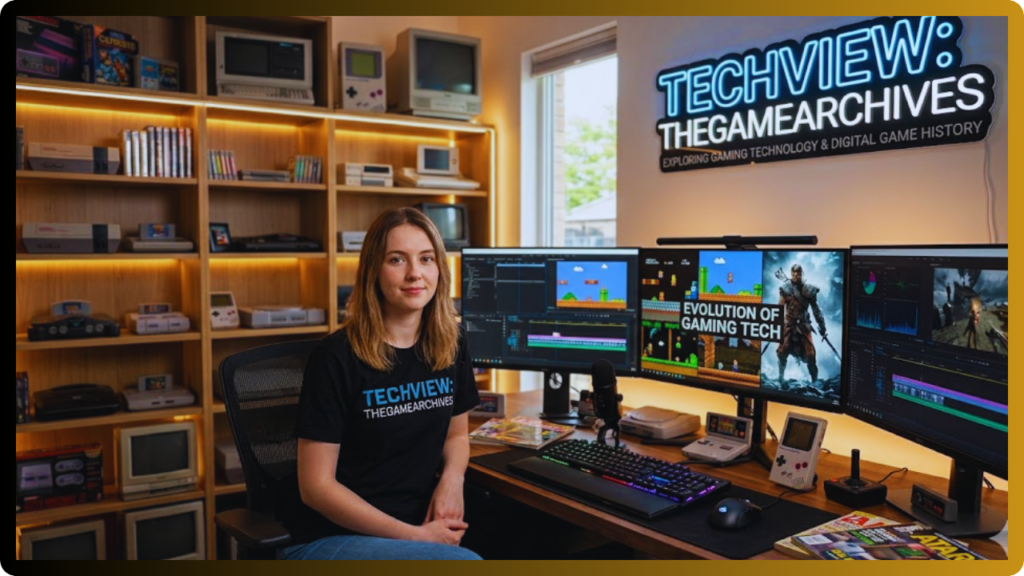

The gaming industry has experienced remarkable growth over the past several decades. What once began as simple pixel-based entertainment has evolved into a global digital ecosystem filled with immersive worlds and advanced technology. Players today interact with highly realistic environments, complex characters, and detailed storylines powered by modern hardware and software systems. Understanding this transformation requires more than just playing games; it requires studying the technology behind them. TechView TheGameArchives represents a concept that focuses on exploring gaming history, development techniques, and technological innovation. Through insights and documentation, techview thegamearchives helps readers understand how the gaming industry has progressed and continues to shape digital entertainment.
Who Is TechView TheGameArchives
TechView TheGameArchives is commonly described as a knowledge-driven gaming resource dedicated to examining the technological and historical aspects of video games. Instead of concentrating solely on entertainment or reviews, the concept of techview thegamearchives focuses on analyzing the tools, engines, and development frameworks that power modern games. It functions as both an educational resource and a digital archive that records important developments in the gaming world. By documenting older gaming systems alongside modern innovations, the platform provides a deeper perspective on how video games evolved over time. This approach helps readers explore both technical knowledge and gaming culture in one place. Through this process, techview thegamearchives gaming technology insights contribute to preserving digital entertainment history while supporting learning and research.
The Evolution of Video Game Technology
From Early Consoles to Modern Platforms
Video game technology has advanced significantly since the early days of arcade machines and home consoles. Early gaming systems operated with limited memory, simple processors, and basic visual capabilities. Developers had to rely heavily on creativity and clever programming to create engaging gameplay experiences. As computing technology progressed, developers gained access to faster processors and powerful graphics hardware. These improvements allowed the creation of detailed environments, improved sound systems, and sophisticated artificial intelligence. Through the research found in techview thegamearchives, readers can see how each technological generation introduced new possibilities for game design and player interaction.
The Role of Digital Game Preservation
Protecting Classic Games and Development History
Game preservation has become increasingly important as older titles risk being lost due to outdated technology. Many classic games were developed for systems that are no longer widely used or supported. Without proper documentation and archiving, these important parts of gaming history could disappear permanently. The digital preservation approach associated with techview thegamearchives focuses on maintaining records of development processes, gameplay mechanics, and technical specifications. This effort allows researchers and developers to study earlier innovations that shaped the industry. Preserving these records ensures that future generations can learn from the creativity and technological achievements of past developers.
Gaming Technology Trends in the Modern Era
New Innovations Shaping Interactive Entertainment
Modern gaming technology continues to evolve rapidly with the introduction of powerful computing systems and advanced software frameworks. Developers now integrate artificial intelligence, realistic physics engines, and high-resolution graphics to build immersive digital worlds. The popularity of open-world games, multiplayer systems, and live online services has also transformed how players experience games. Innovations such as virtual reality and augmented reality continue to push the boundaries of interactivity. Research associated with techview thegamearchives gaming technology insights helps explain how these developments influence both game design and player expectations. These technological changes demonstrate how the gaming industry continues to innovate and expand.
Educational Value for Gamers and Developers
Learning Game Design and Technical Foundations
Studying gaming technology provides valuable educational opportunities for both players and developers. Game development involves complex processes including programming, visual design, audio engineering, and storytelling. Understanding these components helps readers appreciate the effort required to create interactive entertainment. Educational resources connected with techview thegamearchives gaming research content encourage readers to explore these topics in greater depth. Aspiring developers often study older games to learn how design strategies evolved over time. By combining technical analysis with historical context, techview thegamearchives supports learning within the gaming community.
The Importance of Game Development Tools
Software and Engines Behind Modern Games
Game development tools play a critical role in building the interactive experiences that players enjoy today. Modern developers rely on advanced engines capable of handling graphics rendering, physics simulation, and artificial intelligence systems. These tools simplify many aspects of game creation while also expanding creative possibilities. Over time, development frameworks have become more accessible, allowing independent studios to produce high-quality games. Insights connected with techview thegamearchives gaming technology insights explain how these tools influence the structure and performance of modern games. By studying development software, readers can better understand how complex gaming worlds are created.
The Influence of Gaming Communities on Technology
Player Feedback and Innovation in Game Design
Gaming communities play an essential role in shaping the future of video games. Players regularly share feedback about gameplay mechanics, performance issues, and new features they would like to see. Developers often analyze this feedback to improve their games through updates and expansions. Community discussions also inspire new ideas that influence future game development projects. This relationship between developers and players creates a cycle of innovation within the industry. Observations associated with techview thegamearchives gaming technology insights highlight how collaboration between players and developers contributes to the continuous improvement of gaming experiences.
The Future of Gaming Technology
Emerging Developments and Industry Growth
The future of gaming technology promises even more immersive and advanced experiences for players around the world. Innovations in artificial intelligence, machine learning, and graphics rendering are enabling developers to build increasingly realistic environments. The global gaming market now generates more than 180 billion dollars annually, demonstrating its massive cultural and economic impact. As technology evolves, developers will continue exploring new storytelling techniques and interactive systems. Research related to techview thegamearchives suggests that technologies such as cloud gaming and virtual reality will shape the next generation of digital entertainment. These developments indicate that the gaming industry will continue expanding in both scale and creativity.
The Role of Graphics Technology in Gaming
Graphics technology has played a major role in shaping the visual experience of modern video games. Early titles used simple pixel art due to limited hardware capabilities, but modern systems now support photorealistic rendering and dynamic lighting. These improvements allow developers to create detailed environments that enhance immersion for players. Advanced graphics cards and rendering engines make it possible to display complex scenes with millions of polygons. Through insights connected with techview thegamearchives, readers can explore how graphics innovations have transformed game design. These visual advancements also support smoother animations and realistic character expressions that improve storytelling. As gaming hardware continues to evolve, graphics technology will likely deliver even more cinematic experiences for players.
The Growth of Online Multiplayer Gaming
Online multiplayer gaming has become one of the most influential aspects of modern digital entertainment. Players can now connect with others around the world and participate in cooperative or competitive gameplay. This shift has created massive online communities that support tournaments, streaming platforms, and esports competitions. The development of faster internet connections has allowed multiplayer systems to operate smoothly with minimal latency. Observations within techview thegamearchives gaming technology insights highlight how networking technology has expanded the possibilities for interactive gaming experiences. Many modern games now rely heavily on online features such as matchmaking systems and live updates. This connectivity has turned gaming into a global social activity rather than a purely single-player experience.
Artificial Intelligence in Video Games
Artificial intelligence has significantly improved how characters behave and interact within digital worlds. Early games relied on predictable patterns, but modern titles use sophisticated AI algorithms to create more realistic responses. Non-player characters can now adapt to player behavior, making gameplay more dynamic and engaging. AI is also used for procedural world generation and strategic decision-making in complex games. Discussions surrounding techview thegamearchives technology insights often examine how artificial intelligence continues to enhance the realism of modern gaming. In many games, AI now controls advanced enemy tactics and adaptive difficulty systems. These innovations create gameplay that feels more natural and responsive to each player’s actions.
Virtual Reality and Immersive Gameplay
Virtual reality technology has introduced a completely new way to experience video games. Instead of viewing the game on a traditional screen, players can step inside a three-dimensional environment and interact with objects directly. VR headsets track player movement, allowing for natural interactions within digital worlds. This technology has the potential to transform gaming, education, and simulation training. By studying developments mentioned in techview thegamearchives, readers can better understand how immersive technology is shaping the future of gaming. Developers are experimenting with motion controls and spatial audio to increase realism. As hardware improves, virtual reality may become one of the most immersive forms of interactive entertainment.
Cloud Gaming and Streaming Platforms
Cloud gaming has changed how players access and experience video games. Instead of installing games locally, players can stream them directly from remote servers. This approach allows high-performance games to run on devices that normally would not support advanced graphics. As internet infrastructure improves, cloud gaming services continue to expand globally. The technical explanations associated with techview thegamearchives gaming technology insights help readers understand the infrastructure behind these streaming systems. This technology also reduces the need for expensive gaming hardware in many cases. In the future, cloud platforms could make high-quality gaming accessible to a much wider audience.
The Impact of Esports on the Gaming Industry
Esports has transformed gaming from a hobby into a competitive professional industry. Major tournaments attract millions of viewers worldwide and offer substantial prize pools. Professional players, coaches, and analysts now work within structured esports organizations. This competitive ecosystem has encouraged developers to design games with balanced mechanics and spectator-friendly features. Through insights found in techview thegamearchives, readers can explore how esports continues to influence the development of modern games. Streaming platforms and social media have further boosted the popularity of competitive gaming. As a result, esports has become an important part of the global entertainment industry.
Game Design and Player Experience
Game design focuses on creating engaging experiences that keep players interested and motivated. Developers combine storytelling, visual design, sound, and gameplay mechanics to build immersive worlds. Balancing these elements requires both technical expertise and creative thinking. Modern game design also emphasizes accessibility and player feedback. Discussions related to techview thegamearchives gaming research content highlight how thoughtful design decisions influence player satisfaction. Many studios also analyze player data to improve game balance and progression systems. This continuous refinement helps ensure that games remain enjoyable and rewarding for diverse audiences.
Mobile Gaming and Global Accessibility
Mobile gaming has dramatically expanded the reach of video games across the world. Smartphones allow millions of people to access games without expensive hardware. Developers design mobile titles that run efficiently on a wide range of devices. This accessibility has introduced gaming to audiences who previously had limited exposure to the industry. Insights connected with techview thegamearchives show how mobile platforms have become a major part of the global gaming ecosystem. Many popular games now release mobile versions to reach wider audiences. This trend demonstrates how portable technology continues to reshape the gaming landscape.
The Cultural Influence of Video Games
Video games have evolved into a powerful cultural medium that influences entertainment, storytelling, and social interaction. Many modern games explore complex themes and narratives similar to films or literature. Gaming communities often form around shared experiences, creating global networks of players. These cultural connections demonstrate how gaming has become more than just entertainment. The perspective provided by techview thegamearchives gaming technology insights shows how video games continue to shape modern digital culture. Popular games often inspire movies, music, and merchandise across multiple media platforms. This cultural influence highlights the growing significance of gaming in global entertainment.
The Future of Interactive Entertainment
The future of gaming will likely involve even more advanced technology and creative experimentation. Developers are exploring artificial intelligence, procedural generation, and immersive simulation systems. New hardware innovations will enable deeper interaction between players and digital environments. As technology continues to evolve, the gaming industry will expand into new forms of entertainment and storytelling. Observations connected with techview thegamearchives help readers understand the direction in which interactive entertainment is moving. Emerging technologies such as mixed reality and advanced cloud computing may redefine how games are played. These developments suggest that the next generation of gaming will be more interactive and immersive than ever before.
FAQs
What is TechView TheGameArchives?
TechView TheGameArchives is a concept focused on analyzing gaming technology, preserving game history, and explaining the development processes behind video games.
Why is TechView TheGameArchives important?
It helps document gaming history and provides insights into the technology used to create modern video games.
Who can benefit from TechView TheGameArchives?
Gamers, developers, researchers, and students interested in gaming technology and design can benefit from learning about it.
Does TechView TheGameArchives only focus on modern games?
No, it studies both classic and modern games to understand how technology has evolved.
How does TechView TheGameArchives help preserve games?
By documenting technical details, development strategies, and historical context, it helps ensure that important gaming knowledge is not lost.
- You May Like this:Darhergao Hair Dye 2026 Vibrant Safe Long Lasting Color at Home
Final Thoughts
The gaming industry continues to evolve as technology advances and new creative ideas emerge. TechView TheGameArchives offers a valuable perspective that combines gaming history with technical knowledge. By studying the development tools, innovations, and cultural impact of video games, readers gain a deeper appreciation for interactive entertainment. The insights connected with techview thegamearchives demonstrate how technology continues to shape the gaming experience for players around the world. As gaming technology grows more advanced, understanding its foundations will remain essential for both enthusiasts and developers.