
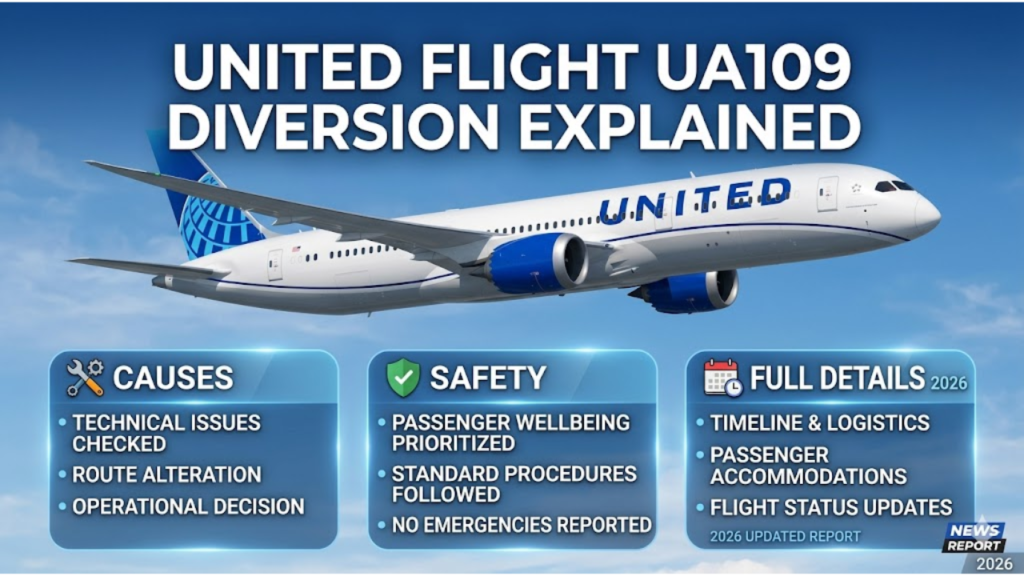

The united flight ua109 diversion has become a widely searched aviation topic as travelers and aviation enthusiasts try to understand why long-haul flights sometimes change their route mid-air. United Airlines operates international services under strict safety regulations, where every operational decision is based on passenger and crew safety. The united flight ua109 diversion highlights how modern aviation prioritizes safety over schedule when unexpected conditions arise. Even if an aircraft is fully functional, operational or medical factors can lead to immediate rerouting. This incident reflects how structured aviation systems respond quickly to maintain global safety standards. It also demonstrates how airline operations are continuously monitored in real time to avoid unnecessary risk. Modern aviation depends on layered safety systems that support quick decision-making. Every diversion is handled through strict coordination between cockpit and ground control.
Who is United Flight UA109 Diversion Related To?
The united flight ua109 diversion is not linked to a specific person but refers to an operational flight event involving United Airlines flight UA109. It involves coordination between pilots, cabin crew, and airline operations teams who manage safety decisions during flight. Aviation authorities may also be involved in monitoring and approving diversion procedures. The united flight ua109 diversion is therefore understood as a procedural aviation event rather than an individual-related incident. It reflects how multiple aviation departments work together in real time. These teams follow strict global aviation standards to ensure safety. Every decision is documented and reviewed after landing for compliance. It also highlights how communication between international air traffic control units plays a key role. Such coordination ensures safe routing even in unexpected situations. Post-flight analysis helps improve future operational safety procedures. Airlines use these events to strengthen long-term safety systems.
Safety Protocols Behind United Flight UA109 Diversion
Crew Safety and Regulatory Standards
The united flight ua109 diversion occurred under strict aviation safety regulations that require a fully functional crew at all times during long-haul flights. If any crew member becomes medically unfit or unavailable, the flight may no longer meet international safety requirements. Airlines must immediately reassess the situation and ensure compliance with aviation laws. The united flight ua109 diversion shows how seriously airlines follow these safety protocols. It also highlights how crew readiness is as important as aircraft performance. International aviation rules are designed to prevent risk escalation in the air. Even minor issues can lead to operational changes if safety margins are affected. These regulations are enforced globally without exception. They ensure uniform safety standards across all airlines. Safety compliance remains the top priority at all stages of flight. Aviation authorities continuously audit these standards to maintain consistency. This creates a highly structured and controlled operational environment that supports safe global travel.
Passenger Handling During United Flight UA109 Diversion
Communication and Comfort Measures
During the united flight ua109 diversion, passengers were informed about the situation through announcements made by the cockpit and cabin crew. Clear communication is essential to maintain passenger confidence during unexpected flight changes. Airlines ensure that passengers remain calm, informed, and supported throughout the diversion process. The united flight ua109 diversion demonstrates how structured communication reduces confusion during in-flight changes. Crew members are trained to manage passenger concerns professionally. Updates are usually provided at regular intervals during diversion. This helps maintain order and reduces anxiety during travel disruptions. Additional reassurance is often given through cabin announcements. Passenger comfort becomes a priority during unexpected situations. Airline staff are trained for stress management scenarios. This ensures a controlled and calm cabin environment. Airlines also provide post-landing assistance to help passengers continue their journey smoothly. Support teams are prepared at diversion airports to manage rebooking and guidance efficiently.
Operational Impact of United Flight UA109 Diversion
Airline Scheduling and Network Adjustments
The united flight ua109 diversion created temporary adjustments in airline operations, including aircraft scheduling and connecting flight coordination. Long-haul diversions can affect multiple routes within a global airline network. However, airlines use advanced systems to quickly manage these disruptions and minimize delays. The united flight ua109 diversion highlights how complex airline systems are designed for flexibility and rapid response. Ground teams immediately reassign aircraft and crew where needed. This ensures continuity of operations across international routes. Such coordination helps reduce long-term delays in airline networks. Backup planning systems are activated instantly during diversions. Airlines maintain contingency schedules for such events. This allows smoother recovery after operational disruption. Efficient planning reduces overall passenger inconvenience. It also ensures minimal impact on other scheduled flights. Operational resilience is a key strength of modern aviation logistics systems.
Aviation Safety Importance of United Flight UA109 Diversion
Preventive Risk Management Approach
The united flight ua109 diversion is an example of preventive aviation safety management, where decisions are made before risks escalate. Airlines are trained to prioritize safety over operational convenience. Even minor concerns can trigger a diversion if they affect required safety standards. The united flight ua109 diversion reflects how aviation safety is built on prevention rather than reaction. This approach minimizes the possibility of in-flight emergencies. Safety management systems continuously evaluate risk levels during flight. This ensures proactive decision-making at all times. Airlines use predictive monitoring to avoid unsafe conditions. Early intervention helps prevent larger operational issues. This system strengthens global aviation safety culture. It ensures consistent risk control across all flights. Continuous training and audits reinforce these principles. Preventive action remains the foundation of airline operational safety worldwide.
Aircraft Systems and Flight Monitoring
Role of Technology in Diversion Decisions
Modern aircraft involved in situations like the united flight ua109 diversion are equipped with advanced monitoring systems that help pilots evaluate real-time conditions. These systems provide data on aircraft performance, weather, and operational status. However, final decisions are always made by trained pilots. The united flight ua109 diversion shows how human expertise and technology work together in aviation safety. Aircraft communication systems allow constant updates between cockpit and ground control. Weather radar and navigation tools support route adjustments. This combination ensures safe and informed diversion decisions. Real-time alerts help detect irregular conditions early. Automated systems assist but do not replace human judgment. This balance improves overall flight safety reliability. Technology continues to enhance aviation decision-making. Continuous upgrades make long-distance flights safer and more efficient. These systems reduce uncertainty and support faster operational responses.
Passenger Experience and Travel Disruption
Delay Management and Rebooking Process
The united flight ua109 diversion resulted in changes to arrival schedules and possible delays for connecting flights. Airlines typically manage such disruptions by offering rebooking options or alternative travel arrangements. Although inconvenient, these measures ensure passengers reach their destination safely. The united flight ua109 diversion highlights the balance between operational disruption and safety priority. Airlines often provide assistance at diversion airports. Customer service teams help manage onward travel arrangements. This reduces the overall impact on passenger journeys. Hotels or transit support may be offered when necessary. Airlines aim to minimize passenger inconvenience during disruptions. Communication continues until travel is fully resolved. Recovery operations are prioritized after landing. Many passengers are rebooked within hours depending on availability. Airline systems are designed to restore normal travel flow as quickly as possible. This ensures minimal disruption to global passenger movement.
Importance of Diversions in Aviation
Why Diversions Are Standard Practice
The united flight ua109 diversion demonstrates that diversions are a normal and necessary part of aviation safety systems. Aircraft are constantly monitored, and any deviation from required safety standards can trigger a controlled diversion. This ensures flights never continue under unsafe conditions. The united flight ua109 diversion reflects how global aviation prioritizes safety at every stage of flight. Diversions are built into airline operational planning. They are not signs of failure but safety measures. This system strengthens overall trust in air travel. Pilots are trained extensively for diversion scenarios. Airports are prepared to handle unexpected landings. These procedures ensure global aviation reliability. Safety remains the core principle behind every diversion decision. Diversions also help prevent small issues from becoming larger risks. This structured approach is one of the reasons aviation is considered the safest mode of transport.
Weather Conditions and Flight Diversions in Aviation
Weather plays a major role in decisions like the united flight ua109 diversion because changing atmospheric conditions can impact flight safety and route planning. Storms, turbulence, or poor visibility may force pilots to adjust flight paths or land at alternate airports. Aviation meteorology systems continuously monitor conditions to support safe decision-making. The united flight ua109 diversion reflects how weather data is integrated into real-time flight operations. Airlines rely on advanced forecasting tools to predict potential risks. These systems help pilots avoid hazardous areas during flight. Weather-related diversions are common in long-haul aviation routes. Safety always takes priority over maintaining original flight paths. This ensures smooth and secure air travel even in unpredictable conditions.
Role of Air Traffic Control in United Flight UA109 Diversion
Air traffic control plays a critical role in managing events like the united flight ua109 diversion by guiding aircraft to safe landing routes and coordinating airspace usage. Controllers provide pilots with updated instructions, alternative airport options, and traffic separation information. The united flight ua109 diversion shows how essential ground communication is during in-flight decision-making. Air traffic control ensures that diverted aircraft are safely integrated into nearby airport traffic systems. Coordination between multiple control centers may be required during long-distance flights. This global network helps maintain safety and efficiency. Without air traffic control support, diversion management would be significantly more complex. Their role ensures organized and safe rerouting of flights.
Economic Impact of United Flight UA109 Diversion
The united flight ua109 diversion can also have minor economic effects on airline operations, including fuel costs, scheduling changes, and operational adjustments. Diversions may increase operational expenses due to additional landing fees and resource reallocation. However, airlines consider these costs necessary for maintaining safety standards. The united flight ua109 diversion highlights how safety decisions are prioritized over financial considerations. Passenger satisfaction and regulatory compliance remain more important than short-term costs. Airlines are structured to absorb such operational changes efficiently. Financial systems are designed to handle unexpected events without disrupting overall service stability.
Aviation Training and Preparedness for Diversions
Flight crews undergo extensive training to handle situations like the united flight ua109 diversion, including simulation exercises for emergency and non-emergency diversions. Training programs focus on decision-making, communication, and coordination with air traffic control. The united flight ua109 diversion reflects how well-trained aviation professionals respond to unexpected scenarios. Pilots and cabin crew are regularly tested on diversion protocols. This ensures readiness for real-world situations at any time. Training also includes passenger management during disruptions. Continuous education helps maintain high safety standards in aviation operations. Preparedness is a key factor in successful diversion handling.
Future Improvements in Aviation Safety Systems
The united flight ua109 diversion also highlights the importance of ongoing improvements in aviation technology and safety systems. Airlines continuously invest in better monitoring tools, predictive analytics, and communication systems. These advancements aim to reduce the likelihood of diversions while improving response efficiency. The united flight ua109 diversion shows how real incidents contribute to system improvements. Future aviation systems are expected to become more automated and data-driven. This will help pilots make faster and more accurate decisions. Continuous innovation ensures safer and more efficient global air travel.
FAQs
What is United Flight UA109 diversion?
It is a precautionary rerouting of United Airlines flight UA109 due to safety requirements.
Was United Flight UA109 diversion caused by an emergency?
No, it was a precautionary safety decision, not a critical emergency.
Why do airlines divert flights like UA109?
Flights are diverted to ensure safety when operational or crew issues arise.
Do passengers reach their destination after diversion?
Yes, passengers are rebooked or rerouted safely to complete their journey.
Is flight diversion a common aviation practice?
Yes, it is a standard safety procedure used worldwide in aviation operations.
ReadMore:Elaine Boeheim Biography 2026 Life Family Marriage Private Story Explained
Final Thought
The united flight ua109 diversion highlights how modern aviation systems are designed with safety as the highest priority. While diversions may cause inconvenience, they are essential for maintaining strict global aviation standards. The united flight ua109 diversion is a clear example of how airlines, pilots, and aviation authorities work together to ensure every flight is completed safely, even when unexpected situations arise. It shows that aviation is built on structured decision-making and constant monitoring. It also demonstrates how technology and human expertise combine to ensure safe outcomes. Every diversion becomes a learning opportunity for improving future operations. Safety systems continue to evolve based on real-world events. Ultimately, protecting passengers and crew always comes before schedule, cost, or convenience.